Monday, July 27, 2015

First Ride Review: 2016 Trek Madone 9

Five High End Builds, Two Framesets, and Project One Configurations

Article and Pictures from Peloton Magazine


Peloton Magazine released their first of reviews of the 2016 Trek Madone. Trek says it's the fastest bike in the WORLD, and with new IsoSpeed Technology applied to the frame it is as comfortable as it is fast. 


We heard about the inclusion of Trek’s ISO Speed decoupler in the seat cluster and the unique tube-in-tube design of the seat post. We saw the integration, a front end with every cable routed internally and the engineering it took to do it right, the Madone specific brakes and the doors that shield them yet swing out of the way during tight turns. And then of course there are the aero shapes and the OCLV construction. Trek claims the bike is the fastest in the world and in 56cm can be built right at the UCI minimum weight. Trek has not tested it against the 2016 Venge yet but are confident it will prevail. Based on the numbers we have seen from both companies our educated guess is the Venge will create slightly less drag. But the new Madone is still undeniably fast, shaving 22 watts of effort at 40kph versus the 2014 Madone.


But all of this will just be written off as hype if the bike doesn’t ride, doesn’t live up to Trek’s billing as the ultimate race bike. A race bike with a huge aero advantage that doesn’t sacrifice an ounce of performance elsewhere – weight , comfort, power transfer, handling – to make it happen. So, over 60 spirited miles around Utrecht, we did our best to find out how close to the target of ultimate race bike, Trek got.


Of course, these are simply first impressions, good or bad it’s just a glimpse of what might be to come. Let’s start with the rear of the bike and the new ISO Speed. Here it appears Trek has hit the proverbial home run. By and large the perception of aero bikes being so harsh is no longer correct. Manufacturers have gotten much better at taming harsh tube shapes, but no aero bike is as smooth and comfortable (yes, comfortable) as the new Madone. Even most pure road bikes aren’t as smooth and compliant at the rear as the Madone. 


ISO Speed, thought to be a great solution for cobbles and ‘cross, turns out to be even more potent when applied to an aero bike. The caveat to this is the bike’s front end. Much like the original Domane, the fork cannot match the rear’s astonishingly smooth feel. The new fork is not harsh by any stretch, but has a more traditional ride feel than the rear, stiffer than a Domane to be sure. For all its comfort we doubt this bike would ever be used at Roubaix.


Under power, as much as we managed to put down over unfamiliar roads and in an unfamiliar group, the Madone feels very lively. The rear is precise and direct under effort making the legs feel sharp and fresh. Combined with ISO Speed the power can be laid down over the nastiest of roads, something no other aero bike can claim. And when it comes to stopping, the new Bontrager brakes seem to live up to the Dura-Ace 9000 brakes that were their benchmark.


One of the eternal truths of the bike launch is the rides are stop and go, uneven affairs. The peloton has a wide range of abilities and stops are frequent to adjust a saddle or bars. Typically, these stops are made as quickly as possible because the group continues down the road and you are forced to chase back on. It was here that we discovered what was truly special about the bike. The new Madone is designed to assassinate gaps with extreme malice. Nestle into the drops, or drape your arms over the new integrated bar-stem combo, lay down some watts, and the bike launches you to gap closing speed ferociously. Wind up the pace to 30mph and wait for the burn to start in the legs and you’ll find the Madone holds off that moment when you crack for a few hundred meters, which means you will cross more gaps more quickly, or better yet create bigger ones if you are on the attack.

The new Madone has a signature technology – ISO Speed – that improves ride quality in a real and tangible way and surprisingly, at least to us, ISO Speed seems more at home in an aero world than anywhere else. When going this fast is this comfortable, why should a rider ever get beaten up by his bike?


Peloton's first ride was on a 60cm 2016 Madone Race Shop Limited H1.

2016 Madone 9 Series H1 
2016 Madone 9 Series H2
2016 Madone 9.2 H2 – Shimano Ultegra 6800 
2016 Madone 9.5 H2 – Shimano Dura-Ace 9000
2016 Madone 9.9 H2 – Shimano Dura-Ace Di2
2016 Madone 9.9 Women’s – Shimano Dura-Ace Di2
2016 Madone Race Shop Limited H1 – Shimano Dura-Ace Di2 


Come to Bumstead's Bicycles for all your cycling needs.
We are located at 1038 W. 4th St in Ontario, CA.
You can reach us by phone at (909) 984-9067

Tuesday, July 21, 2015

Uncompromising Cross Country Performance From An Old Classic

Brand New 2016 Trek Procaliber SL Gets IsoSpeed Decoupler


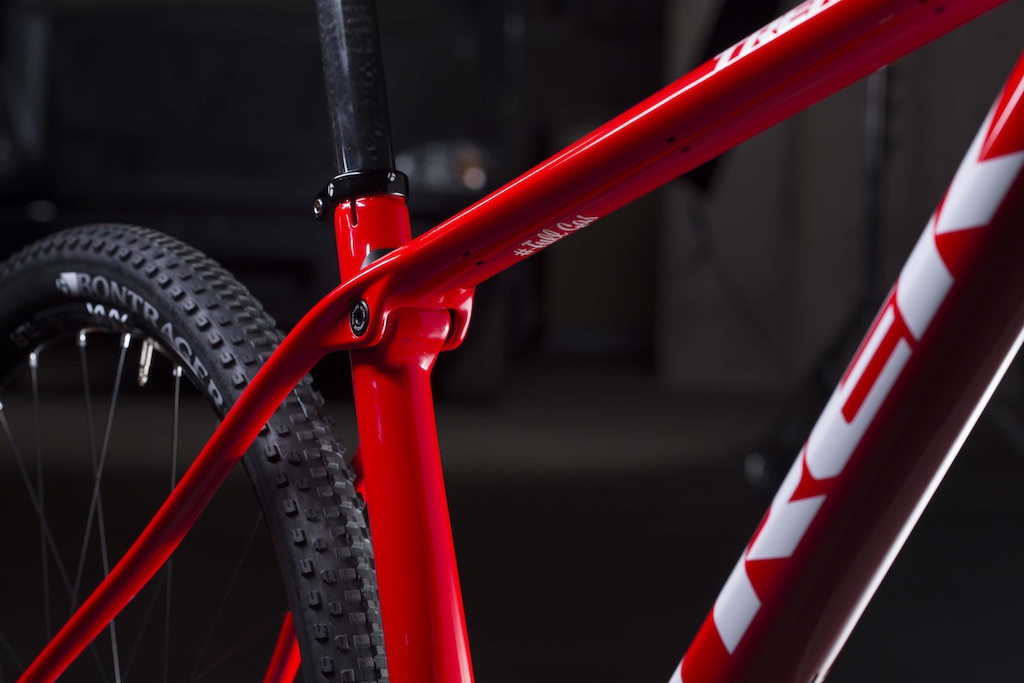
Ever since Trek’s clever IsoSpeed Decoupler was unveiled on the Domane it seemed like a natural evolution would be to migrate it to hard tails. That’s exactly what Trek has done after first outfitting their Boone cyclocross bike, and now the new Procaliber SL.


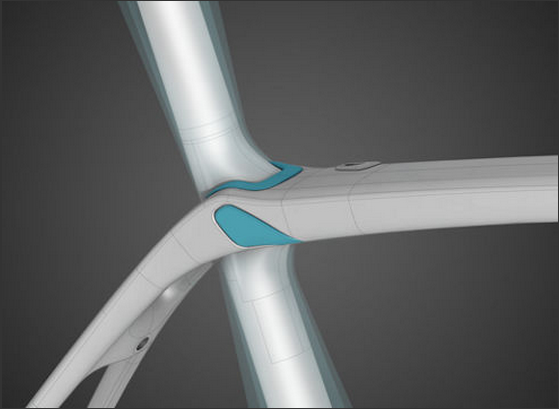
The IsoSpeed Decoupler involves detaching the top tube from the seat tube and then joining the two together with a pivot that allows for up to 11mm of 'compliance'. Trek is careful not to use the word 'travel' in their description of the technology – after all, this is still very much a hardtail, and the rear end doesn't move in the way a traditional full suspension bike would.


Trek states the frame ends up about 100g heavier than the Superfly SL, with a Procaliber SL 17.5″ frame with paint and hardware measuring 1012g. Given the choice, Trek claims their racers prefer the 30% better compliance of the Procaliber SL over the Superfly SL even with the weight penalty. Trek puts it out there that the Procaliber SL is 70% more compliant than competing hard tails.


Updates don’t stop at the ISO Speed. Boost 110/148 spacing makes an appearance here, along with Trek’s new Control Freak cable routing.

With up to 54 different possible ways to run cables, a big enough access port to install or swap cables without too much headache, and a zip-tie port to keep everything quiet, and those wanting or needing to run an external rear brake hose have the option with super simple cable-tie slots on the downtube.

DETAILS

Frame
OCLV Mountain Carbon, IsoSpeed, E2 tapered head tube, MicroTruss, Control Freak internal control routing, Carbon Armor, balanced post mount brake, PF92, Boost148 & G2 Geometry on 29ers

Front suspension
RockShox RS-1, Solo Air, Accelerator damper, XX Sprint remote lockout, Predictive Steering 110, E2 carbon tapered steerer, G2 Geometry w/51mm offset on 29ers, 100mm travel

Wheels
DT Swiss XMC1200 Carbon, tubeless strips & valves, 15mm front, 12mm rear, Predictive Steering 110, (Boost148 on 29ers)

Tires
Bontrager XR1 Team Issue, Tubeless Ready, 120tpi, aramid bead, 29x2.00" (Bontrager XR2 Team Issue, Tubeless Ready, 120tpi, aramid bead, 27.5x2.20")

Shifters
Shimano XTR, 11 speed

Rear derailleur
Shimano XTR, Shadow Plus

Crank
Race Face Next SL, 32T

Cassette
Shimano XTR, 11-40, 11 speed

Chain
Shimano HG900

Saddle
Bontrager Montrose Pro, carbon rails

Seatpost
Bontrager XXX, OCLV Carbon, 31.6mm, 5mm offset

Handlebar
Bontrager XXX, OCLV Carbon, 31.8, zero rise

Stem
Bontrager XXX, OCLV Carbon, 31.8mm, 7 degree

Headset
FSA IS-2 carbon, E2, sealed alloy cartridge

Brakeset
Shimano XTR Race hydraulic disc

Grips
ESI Chunky

Come to Bumstead's Bicycles for all your cycling needs.
We are located at 1038 W. 4th St in Ontario, CA.
You can reach us by phone at (909) 984-9067
Thursday, July 16, 2015

All New SRAM Guide Ultimate Brakes Offer More Consistent, More Reliable Braking Power

Photo from Vitalmtb.com

SRAM's Most Advanced Braking System EVER - PHOTOS


Product Photos: Ryan Palmer
bikemag.com


With its completely new, 4-piston S4 caliper, SwingLink lever cam, and carbon lever blade, the 360-gram Guide Ultimate stands alone as the new leader in its class. It has been engineered to be light and powerful, with superior heat management capabilities, which give you better, more consistent, more reliable braking. The new caliper design also incorporates a re-designed seal and aluminum piston interface for ease of setup and improved consistency, while Bleeding Edge technology makes bleeding Guide Ultimate a quick and easy task.


SRAM Guide Ultimate
The Guide Ultimate master has all the same guts as the Guide RSC, but is dressed with a carbon lever blade and titanium hardware.
SRAM Guide Ultimate Caliper


There’s a whole lot more to these new stoppers than carbon levers and fancy bolts. The real magic of the SRAM Guide Ultimate is in the all-new S4 caliper. Aside from needing to maintaining piston size and pad shape, engineers were given free reign to design the ‘ultimate’ caliper to mate with the already-impressive Guide master. SRAM’s main goal with the S4 caliper was to create a brake that feels exactly the same every time you pull the lever. This is accomplished by managing heat, creating super-consistent seal/piston rollback, and simplifying the bleed.

This little piece is a heat shield, and it’s responsible for significantly lowering the running temperature of the Guide Ultimate. SRAM experimented with heat shields around the whole pad opening, but found that the most significant gains were made in just the one location.


SRAM Guide Ultimate caliper


The black caliper on the left is the existing Guide caliper, and the one on the right belongs to the new Guide Ultimate. To make further reductions in the running temperature, engineers significantly increased the size of the pad pocket. You can barely make out the heat shield at the very upper part of the pad pocket. Between the new pistons, heat shield and wider opening, SRAM claims that the Guide Ultimate runs cooler than a Shimano XTR brake with both Ice-Tech and Freeza technology.
To simplify the bleeding process, there’s a new bleed port interface, with a new tool. The tool snaps into place and is held securely with a snap ring and rubber seal. After the connection is made, turn the knob counterclockwise to open the system for bleeding. There’s also a redesigned fluid path that allows bubbles to move through the system without getting caught up–as long as you have the pistons pushed back in, that is. To help remind you to do this, SRAM put the bleed port on the inside of the caliper so that you have to remove the wheel in order to do a bleed. Not only will it remind you to reset your pistons prior to bleeding, it’ll keep brake fluid off your rotors.

SRAM Guide Ultimate Bleed Adaptor
Here’s the bleed adapter locked into place.
SRAM Guide Ultimate

To round out this new flagship stopper, SRAM will be offering two-piece Centerline rotors in both six-bolt and Centerlock mounting and in 140-, 160-, and 180-millimeter diameters. They’ll retail between $72 and $78.


SRAM Guide Ultimate
And from the side.


Come to Bumstead's Bicycles for all your cycling needs.
We are located at 1038 W. 4th St in Ontario, CA.
You can reach us by phone at (909) 984-9067

Tuesday, July 14, 2015

Tired of Flat Tires? VIDEO Demonstration of the BEST Tire Liner on the Market

Make Flats A Thing Of The Past


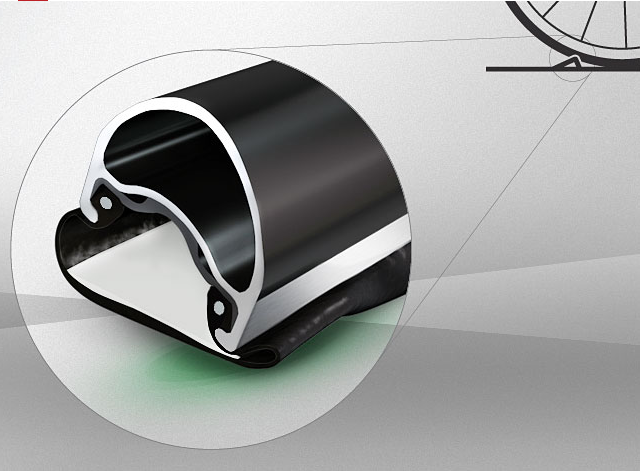
As you will see in the reviews that follow, nothing has yet been invented that stop 100% of bicycle flats.  However, RhinoDillos tire liners are now proven to be the most effective method to stop flats in bikes.


  • Cushions the tube using a softer but still flat resistant blue layer
  • Soft Tips and Rounded edges to avoid friction flats
  • 10% lighter than competition
  • Up to 2 times more thorn resistant than competitors
  • 9 sizes to fit most bikes


REAL CUSTOMER REVIEWS:

"Absolute Necessity" - Robert E.

"Won't ride without them." - Fred C.

"No more flats. Rhinodillos are going into all my bicycle wheel-tire setups from now on" - Robert B.
"Before Rhinodillos..two flats in 50 miles. After.. 500 flat-free miles and counting!" - Nayrevets, Amazon


Come in to the shop today to get yours!

Come to Bumstead's Bicycles for all your cycling needs.
We are located at 1038 W. 4th St in Ontario, CA.
You can reach us by phone at (909) 984-9067

Tuesday, July 7, 2015

2015 Trek Fuel EX Series - Choose Your Adventure

Fuel EX continues to set the bar for full suspension trail bike versatility, bringing race-day tech to all-day adventure.


The Fuel EX is categorized as a ‘trail’ bike, which essentially means that it favors uphill and downhill equally, and the geometry numbers reflect this. A reasonable 68-degree head angle allows for tight handling on undulating terrain, but maintains stability when things get a bit steep. The chainstays and bottom bracket also hit a nice happy medium between agility and stability.

 Like most of its models, Trek offers the Fuel EX many, so make sure to ride a couple sizes to hone in on what fits you best.

2015 Trek EX 5 29
There are two grades of aluminum frames available for the five most economical models (one for the EX 5 and 6, and another for the EX 7, 8, and 9). The higher-end Fuel EX 9.7, 9.8 and 9.9 share the same carbon front triangle, but have different rear ends—the 9.7 has aluminum stays, the 9.8 has carbon seatstays and aluminum chainstays, and the 9.9 has a full carbon rear. Trek claims the frames weigh from 5.3 pounds to 3.9 pounds and all models come in six sizes between 15.5 to 23 inches.


Additionally, each frame features a tapered head tube, press-fit bottom bracket, thru-axle-compatible rear dropouts, magnesium rocker link, and a guard on the downtube to protect against rock strikes. The EX 7 through 9.9 have internal cable routing, ISCG 05 chainguide tabs, and internal and external dropper-post routing. The carbon models have a removable front-derailleur mount for 1x drivetrains.


The EX 7 through 9.9 also are equipped with Trek's proprietary, Fox-built DRCV (dual rate control valve) shock with dual air chambers. Trek says DRCV combines the control and small-bump compliance of a small-volume shock with the big-hit plushness of a larger air can.


Without a doubt, the RE:aktiv damper is the key piece, or heart, of the updated Trek Fuel series. The technology was first taken to the trails mostly as an external addition to Trek's already established DRCV, until such a time that Trek and Penske were happy with the ride characteristics. Once they reached this point the shock was passed along to the clever tech team at Fox, in order to make the technology ready to build for the masses.


This partnership resulted in a damper that has the ability to create a solid platform for both rider and smaller external inputs, yet when a larger velocity impact occurs, the valves open and the suspension takes action. This is different to the more common tactic of shutting off the valves altogether, or at least heavily restricting their ability to allow oil through, and it grants riders a little of the best of both worlds. A strong platform to mash on, but retaining the ability to smoothen out the trail and theoretically, retain traction when climbing more technical terrain.


"Never before have I ridden a bike that is as capable on the descents as it is on the climbs. Being more of a climber, the climbing aspect appealed to me more than most - could it climb? Hell yes it could, and preferably in the most hellish terrain imaginable. I found the Fox Performance Suspension easy to set up as well as fine tune for certain courses or riding locations." - Joey Esterhuyzen; BikeRoar.com


We are located at 1038 W. 4th St in Ontario, CA.
You can reach us by phone at (909) 984-9067

Wednesday, July 1, 2015

The all-new 2016 Trek Madone is an aero bike, no apologies.

Seven ways the new Madone is better than the old one

By Caley Fretz (velonews.com)


The old Trek Madone, launched in 2013, was a frame born of compromise. It had rounder tube shapes than most of its competitors, designed to maintain ride quality while providing only modest aerodynamic benefit.

Its replacement is more purposeful. The all-new Madone is an aero bike, no apologies.

The new Madone features increased system integration — the handlebars, stem, and brakes are all proprietary now — as well as revised, more extreme tube shapes and the addition of an IsoSpeed decoupler, technology borrowed from the cobblestone-inspired Domane line.


Trek claims the new Madone is more aerodynamic and more comfortable than its predecessor, with a stiffer fork for improved handling.


According to Trek’s wind tunnel testing, the Madone is faster than the Giant Propel, Cervelo S5, and Felt AR. It was not tested against the brand-new Specialized Venge, or the old Venge, which Trek described as “not a leader in aerodynamics.”


If true, that’s a big step up from the old Madone, which, though aerodynamic, couldn’t touch bikes like the S5 or Propel in the wind tunnel. In fact, this new Madone seems to be a jump up from the old version in almost every way.

So how did Trek get there?

More shapely
Trek is a fan of the Kamm tail, a truncated version of traditional teardrop aero shapes. It allows engineers to control airflow while using wider, stiffer, and usually lighter tubes. The love of Kamm hasn’t changed, but the new Madone pushes the design further, with longer, more aerodynamic profiles, and mates it with traditional teardrop-shaped tubes in particular areas.


Hide everything
Hiding the cables and housing was clearly the design directive behind the new Madone. The engineering team at Trek managed to hide away every millimeter of cable from the brakes and front derailleur, with only a short length reaching out to the rear derailleur to remind riders that the levers are indeed connected to the derailleurs and brakes.


Integrated brakes
The brakes aren’t hidden, but they are proprietary and the front is tucked perfectly into the fork. Both front and rear brakes are center-pull (like an old Dia-Compe, but hopefully less terrible) with fully internal cables.

Each arm has an independent spring-tension adjustment to center the pads and adjust lever-pull force. The brakes also have two spacing screws to adjust for pad wear or different rim widths. These spacing screws allow riders to swap between rims with up to 6mm difference without adjusting the center wedge.

The brakes are not branded Bontrager — as Madone brakes have been in the past — but will be available in the Bontrager parts catalog. The mount is completely proprietary, so the availability of a third-party option is unlikely.

The front brake cables run down through the head tube. To allow the fork to turn, Trek engineered what it calls “Vector Wings” into the head tube. Essentially, there are two little doors on the front of the head tube that open up as the fork is turned, allowing the center-pull brake cable to rotate.

One-piece bar and stem
Complete cable integration required a bar/stem rethink. The two have been combined into a single unit, with cable routing through the bar and stem and into the headset.

In a nice touch for the home mechanic, Trek designed the proprietary headset spacers with a clamshell, so they can be added or removed without cutting cables and housing.

Simply hiding the cables and housing saved 40 grams of drag, according to Trek.


Control center
With all cables and housing hidden from view, Trek had to design a way to adjust them on the fly. The solution: the ‘control center,’ located on the top of the down tube, which houses a front derailleur trim dial on mechanical setups and a Di2 battery and junction box on electronic setups.


Careful bottle placement
Trek did most of its wind tunnel testing and subsequent real-world confirmation with two bottles on its frame, to better replicate real-world situations, it said.

The company put a lot of work into the placement of bottle cages inside the frame, studying 140 different iterations before settling on the final placement. The result, Trek says, is a 5.5 percent reduction in drag thanks only to the placement of the bottles. Sounds crazy, but in the marginal gains game of aerodynamics, it’s not beyond possibility.


Borrowing from endurance bikes
Comfort is an oft-ignored feature in the design of race bikes, but it shouldn’t be. Building a comfortable aero frame is made particularly difficult by the shape of aerodynamic tubes, which are usually much longer than they are wide. These narrow shapes act like an I-beam, resisting vertical flex that provides comfort.


Trek’s solution is to borrow technology from its endurance line, the Domane. The IsoSpeed decoupler is essentially a pivot (okay, ‘decoupler’) at the junction of the seat tube and top tube that allows the seat tube to flex independently of the rest of the frame. This provides noticeable vertical give and improves comfort dramatically. It’s now used on the Domane and Silque road bikes, as well as Trek’s new Procaliber hardtail mountain bike.

The Madone’s seat tube appears to be too wide to provide the forward/back flex that makes the decoupler effective. But there’s something hidden inside: tube inside the tube, designed to bend and flex vertically. The outer tube takes care of drivetrain stiffness and acts as a fairing for a rounder inner tube. The result is a significant increase in vertical compliance, visible simply by pressing on the back of the saddle.


We are located at 1038 W. 4th St in Ontario, CA.
You can reach us by phone at (909) 984-9067

Friday, June 19, 2015

How To Choose The Best Urban, City, Commuter, or Hybrid Bike For Your Needs

Here is a quick guide of Trek's collection of road bikes geared toward city riding.


For 2015, Trek has an incredible amount of different hybrid, recreational, and fitness bike options. Each bike style has it's own set of features that helps determine the best use.


Trek's Verve Line


2015 Trek Verve 1


Versatile, smooth and easy riding, the verve line of bikes can take you where you want to go.


Starting with the entry-level Verve 1, Trek places some of the most comfort oriented components onto a strong, lightweight and efficient hydroformed aluminum frame.


The Verve 1 comes with simple-to-use SRAM MRX twist shifters to guide the chain through the bike's 21 speeds (3x7). The drivetrain is fully Shimano Tourney; guaranteeing compatibility and hassle-free maintenance. Every bike in this line has a Women's Specific Geometry counterpart with awesome color schemes:


Hybrid wheels roll fast and smooth so you can go farther, and the soft, comfortable saddle has been well designed to minimize discomfort caused by the contact points where your bottom meets the saddle. The geometry of the bike itself, as well as the angles of the stem and handlebar make for a very upright riding position, perfect for shorter rides — but both you and the bike will be fine on longer rides as well.


2015 Trek Verve 2

The Verve 2 has a few upgrades from the Verve 1 without a crazy price increase. In fact, all of the bikes in this line are well under $1000.


The frame is upgraded to Alpha Gold Aluminum, and the shifters are upgraded to SRAM 3.0 and the rear derailleur is switched to a SRAM X3. These parts are inexpensive and help Trek keep costs down. Despite their low cost, however, they are durable enough for most city riders (4.3/5 stars on amazon over 20 reviews)


The real benefit of the Verve 2 is its ability to cut down on road shock using the Suntour suspension front fork and adjustable suspension seatpost. Mounted atop the seatpost is the Bontrager Boulevard Saddle which when paired with Bontrager Satellite Grips, you have yourself one comfortable bike.


2015 Trek Verve 3


For the 3rd model in the series: an upgraded Shimano Altus/Acera drivetrain swiftly and surely handles the 24 speed Shimano Cassette (8) and Suntour Crank (3).

The Verve 3 also gets bumped up in the rim and tire category; featuring Bontrager double-wall rims and Card Case Ultimate tires. Bontrager's top level of defense is the best of both worlds, combining the benefits of Hard-Case with the proven sub-tread protection of Hard-Case Lite for a tire that accelerates quicker, rolls faster, and lasts longer than competing brands. The ultimate in flat protection!


2015 Trek Verve 4


Lastly, the Trek Verve 4 has a whopping 27-speed drivetrain which is more than capable of handling practically any hill you can find. It's a Shimano Altus/Acera for front and rear derailleurs, respectively.

As far as comfort, the Verve 4 is equipped with Bontrager's Satellite Elite Gel saddle and Satellite Elite Lock-on ergonomic grips.


2015 Trek FX Line


Best of both worlds. Speed, Comfort, Versatility. This bike is perfect for fitness and more!

The 2015 Trek FX line starts at 7.0, but we are going to start with the

7.4 FX


Light, fast, and efficient, the FX 7.4 employs some of the same features as the top of the line Verve. Alpha Gold aluminum frame, internal cable routing, a huge selection of gears (3x9 27-speed) and Bontrager Satellite Plus (Isozone specific) grips.

If you want to start a serious exercise program or even if you just want to go on more bike rides, the features found on the FX can hardly be beat.

Tubeless Rims Means NO MORE Pinch Flats
  • Bontrager Nebula carbon fork
  • Shimano Acera/Deore front and rear derailleur
  • Duotrap S compatible (for bluetooth compatibility)
  • Tubeless Ready Rims
  • Blendr Stem for added user-friendliness
  • Also available with disc brakes or Tektro linear pull brakes


A quick jump to the top of the line:

2015 Trek FX 7.7


On the 7.7 you will find an all carbon frame, E2 carbon fork, a Shimano Tiagra 20 speed drivetrain, and alloy dual pivot brakes.


One of our favorite features, though, is the IsoSpeed Decoupler.

Trek engineers designed a decoupler that allows the seat tube to rotate independently from the top-tube-to-seatstay junction, increasing vertical compliance to twice that of our nearest competitor, without compromising pedaling efficiency. Result: you can ride harder, longer.


2015 Trek Crossrip Line


The previous two bikes will do very well if you are riding around town, on leisurely rides on nice roads and pavement. If you are looking for something a little more heavy duty, something that you can count on when the terrain might be a little troublesome, then may want to look at the 2015 Trek Crossrip.


The drop-bar Crossrip is quick in traffic, sure-footed when the weather or pavement gets rough, yet comfortable over the long haul.

  • Light and fast aluminum frame
  • Drop bars, rack guards and mudguard mounts
  • Lightweight Canti brake system
  • Responsive Handling

Ride-longer technology: Vibration-damping IsoZone road bar and flat-resistant Bontrager Hard-Case tires will keep you rolling all day. And the 24 speed drivetrain (Shimano Claris groupset) will make sure you have the proper gear for whatever you're facing. Plush Bontraker Evoke 1 Saddle and Gel cork tape on the grips reduce the pressure on the points where you contact the bike.


2015 Trek Crossrip Elite


Upgrades for the Elite version of this bike include a Shimano Sora drivetrain, Hayes expert mechanical disc brakes, a Bontrager Satellite Plus carbon fork with lowrider mounts, Bontrager Race Lite IsoZone Handlebar, and tubeless ready Bontrager TLR disc, 32-hole rims.

The CrossRip frame is fast enough for road rides, versatile enough for daily service. Geometry is dialed to accommodate larger tires and fenders with no toe overlap.


We hope that this short guide to Trek's 2015 city bikes has been helpful, and if you still have questions, you can give us a call or just stop by the shop to talk to one of our helpful and friendly staff.

We are located at 1038 W. 4th St in Ontario, CA.
You can reach us by phone at (909) 984-9067