Monday, June 16, 2014

2015 Trek 27.5 EX and Lush Announced

Trek Unveils Fuel EX 27.5, Partners with Fox and Penske for RE:aktiv ShockFor 2015, Trek will offer the EX with 27.5in wheels in three alloy-frame builds, as well as carbon versions at the 9.8 and 9.8 levels.


The Fuel EX 9, 9.8 and 9.8 will also come equipped with Trek’s new RE:aktiv suspension technology co-developed with Fox and Penske Racing Shocks.

This new shock uses Trek’s proprietary DRCV air spring and adds damper technology that boosts low-speed compression to improve pedaling performance while allowing the shock to handle larger, high-velocity impacts without feeling harsh.


The women's counterpart to the Fuel EX, the Lush, will also be available with 27.5in wheels. 


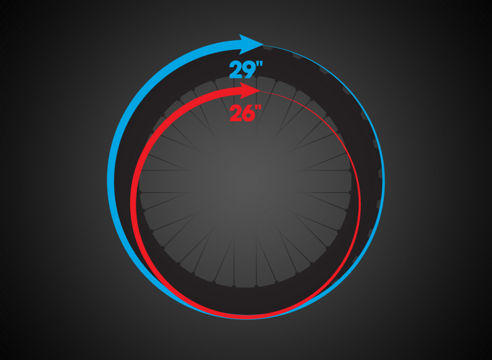
Are you confused about wheel sizes? Click Here.


From Bike Rumor:

The biggest difference that sets the RE:aktiv shock apart from the pack is the inclusion of what Trek and Penske refer to as regressive damping. Most mountain bike suspension is either progressive or digressive, while regressive damping is supposedly true F1 technology that has trickled down to Indy car, NASCAR, and now, well mountain bikes. On the track, regressive damping provides firm support on the straights and corners but as soon as it encounters a bump, the shock instantly opens up to plush, smooth progression. This all happens extremely fast and as Trek points out, “delivers on the unrealized potential of an inertia valve.”

Once Trek and Penske had worked out the damping they wanted to incorporate into the RE:aktiv shock, Fox was brought in to package it into a patent-pending exclusive design only for Trek bikes.
“The thing about Penske is they’re completely focused on being a racing company. So what we’re doing is leveraging their R&D resources and turning that into almost an extension of our own capabilities,” said Trek Director of Suspension Development Jose Gonzalez. “The combined effort with Fox providing the production expertise has produced just an outstanding shock.”

Of course, the bike is fitted with amazing characteristics all around.


 Other full suspension systems firm up under braking, reducing your control when you need it most. Trek’s patented Active Braking Pivot solves that by keeping your suspension active whether you're on the brakes or off.


Most suspension systems attach the bottom of the shock to a fixed frame mount. That fixed mount can contribute to a harsh ride. We solved that with Full Floater, attaching the shock to two moving linkage points so it can better respond to bumps across a wide variety of terrain. It feels like more travel, but it's not. It's smarter travel.


E2 is the evolution of the traditional 1-1/8" headset to a tapered head tube, fork, and headset system. E2 tapers from a 1.5" lower to a 1-1/8" upper headset to provide more material where it matters most, resulting in a stronger, lighter frame with point-and-shoot control.


EVO Link is Trek’s evolution of the rocker link from the plate-and-bolt style used on most suspension bikes to a one-piece rocker link. This lighter link provides a stronger connection point between the front and rear triangles, creating a stiffer frame for greater control with minimal weight.


Dropper posts are great for while-you-ride seat height adjustments, but cable routing has always been an issue. RockShox Reverb Stealth routes the hydraulic housing directly through the frame for the sleekest setup you've seen.


Our robust and confidence-inspiring rear thru axle is about 35% stiffer than an open dropout design. And now, a thru axle wheel change is actually quick and easy, thanks to a tabbed guide in the frame's dropout.


No official release date yet, but keep up with us on our blog and on facebook to find out when they will be available!

Here are the rest of the specs:

Frame — Alpha Platinum Aluminum, ABP Convert, Full Floater, E2 tapered head tube, press fit BB, internal derailleur & dropper post routing, ISCG 05 mount, magnesium EVO link, down tube guard, 120mm travel

Front suspension — Fox Evolution Series 32 Float, CTD (climb-trail-descend) damper, rebound, E2 tapered steerer, 15QR thru axle, 120mm travel

Rear suspension — Fox Evolution Series Float, DRCV, CTD (climb-trail-descend) damper, rebound, tuned by Trek in California, 7.25x1.875"

Sizes —15.5, 17.5, 18.5, 19.5, 21.5"

Wheels — Bontrager Duster Elite Tubeless Ready, 15mm front hub, 142x12 rear hub

Tires — Bontrager XR3 Expert, aramid bead, 27.5x2.35" front, 27.5x2.20" rear

Shifters — Shimano Deore, 10 speed

Front derailleur — SRAM X5, high direct mount

Rear derailleur — Shimano SLX, Shadow Plus

Crank — SRAM S1010, 36/22

Cassette — Shimano HG50 11-36, 10 speed

Chain — KMC X10

Saddle — Bontrager Evoke 2, chromoly rails

Seatpost — Bontrager SSR, 31.6mm, 12mm offset

Handlebar — Bontrager Riser, 31.8mm, 15mm rise

Stem — Bontrager Race Lite, 31.8mm, 7 degree

Headset — FSA IS-2, E2, alloy cartridge

Brakeset — Shimano M615 hydraulic disc

Grips — Bontrager Race Lite, lock-on


Come to Bumstead's Bicycles for all your cycling needs.
We are located at 1038 W. 4th St in Ontario, CA.
You can reach us by phone at (909) 984-9067

Friday, June 13, 2014

3 Top Safety Tips for Cyclists on the Road

Being A Move (or Five) Ahead of Motorists


Anyone who has ridden a bike for an extended period of time has probably had some close calls when cycling in heavy — sometimes even light traffic. While some of those times may be a result of carelessness or multitasking on the part of the rider, we are all too well aware of how distracted and careless drivers can be.

It should suffice to say that defensive riding is the number one way to prevent accidents when out there in the cold street. One reason for that comes from this road proverb: You can drive a truck between what motorists ought to do - what they're legally obliged to do - versus what they actually do. Just because I have the right of way does not mean I can proceed in the comfort that my rights, life and limb will not be violated.

So let's examine a few of the most common places to be aware of danger so that you may avoid nasty collisions or falls.


Cars Turning Right

When passing a motorist (or when one passes you) take a quick second to look through the window of the car. You will be amazed at how much you can divine of a motorist's knowledge and intentions.

Did he see you? Is he looking in his rear or side view mirror? Is he slowing down to make the right turn? Is he concentrated on the flow of incoming traffic— without looking back at you?

Remember - no matter how much it doesn't seem like it - motorists don't want to hit you either. Give them the benefit of the doubt and slow down a bit when you are in a place that you can tell it could be dangerous if motorists are distracted.


Cars Turning Left

Typically, seeing a car that is turning left is not too difficult to do. However, if you are riding in dense traffic, sometimes the traffic going in your same direction can hide a left-turning motorist from your view. If you have to ride in traffic like that, look for an opening in the traffic in front of you. The likeliest reason for this space is to allow a vehicle to cross the road, right in front of you.

Attentive Posture


Many of us who have ridden for a long time know fellow riders who tend to crash more than others. Typically, these are the inattentive riders. This might be excused, but for the consequences. At some point inattentiveness, and the disinclination to practice defensive riding, shifts the blame onto the cyclist. When you decide to engage in the sport of cycling, you're the one who'll pay the steepest price in an accident, regardless of whom is at fault.

The safest posture is to assume the worst from those on the other side. Then, you'll be pleasantly surprised when these drivers do the right thing and, more to the point, you're more likely to arrive home safe and sound and able to ride another day.

Come to Bumstead's Bicycles today. We can help you pick out different accessories and safety equipment like helmets, lights, mirrors and more! Plus, we have great road bikes from Trek including BRAND NEW 2014 Bikes from Trek!

Thursday, June 5, 2014

2014 Trek Crossrip Review — Plenty of Bang for Your Buck

Road bike? Cross bike? Commuter? Yes. Whatever you need to get done, the Trek Crossrip can do it.


Photo and article originally posted on Bicycletimes.com


 "Trek’s CrossRip is part of the Urban Utility line. Two models are offered, the basic Crossrip and the upgraded Elite. Both are spec’d with a drop bar for versatility and comfort, and differ only in the parts package.


Alpha Gold Aluminum


The frame is made from Trek’s 100 series Alpha aluminum, with a Bontrager Satellite carbon fork. The tubes are shaped to create a stiff front end and bottom bracket that doesn’t flex when standing and pedaling, but also to keep frame weight to a minimum.


The shift and brake cables are internally routed, and the non-driveside chainstay has a pair of holes for mounting a proprietary kickstand that will be available in the U.S. mid-spring. (The Euros already have it.) There are mounts for full-coverage fenders and front and rear racks for all-weather commuting, grocery shopping, or light-duty touring. The bike accommodates a 35mm-wide road tire with the fenders, or a small 29×1.8 mountain bike tire without fenders.


Geometry for the CrossRip Elite reflects its all-purpose demeanor. Its long 17.10-inch chainstays create a 41.29-inch wheelbase for stability, which is especially important when carrying a load. The semi-sloping top tube has decent standover clearance, and the front triangle is spacious enough to shoulder the bike. The 72-degree head tube angle is similar to other bikes of this nature and delivers steering that is quick enough to dodge car doors, but not twitchy.
Frame sizing throughout the lineup runs large or at least long; my 56cm frame has a rangy 58.4cm top tube. Trek designed the long top tubes to provide clearance for toes when using large tires and fenders, and spec’d the bike with a shorter stem than what a typical road bike would have to keep the handlebar reasonably close.

The bike’s handling is simply trustworthy. Flex from the frame or wheelset was unnoticeable when the bike was under stress on climbs. With a grocery load on a rear rack, the rear triangle flexes slightly, but still provides an acceptable ride. It’s just a comfortable, straightforward bike.

The Shimano Sora shifters’ hoods are wide and flat, a great fit for my hands, and shifted the 9-speed drivetrain without a problem. The FSA Vero compact double crankset and 11-32-tooth cassette were perfect for the hilly terrain and gravel trails I rode on.

For those that don’t mind riding in rain and snow, and like to stop reliably and predictably, there’s a set of trouble-free Hayes CX5 mechanical disc brakes. I applaud the spec of a larger 160mm front rotor for more stopping power. I also like the Tektro top-mount auxiliary brake levers. Some folks dislike them, but I love having my fingers near the brake levers at all times, regardless of my riding position, and they didn’t create noticeable drag.

If you’re looking for one bike to use for road riding, city utility, light touring, rail-to-trails, and even an intro to cyclocross racing, the CrossRip delivers. It is a solid base for a beginning commuter or as an upgrade platform that you won’t likely outgrow. It’s perfect for adding accessories or making tweaks to fit your year-round riding needs."

Come to Bumstead's Bicycles for all your cycling needs.
We are located at 1038 W. 4th St in Ontario, CA.
You can reach us by phone at (909) 984-9067

Monday, June 2, 2014

Shimano Produces FIRST EVER Electronic Mountain Bike Drivetrain

Shimano Releases XTR Di2 M9050,  Allowing You To Swap Your Derailleur Cables For Electric Wiring

As with the road versions of the system, XTR Di2 electronically relays signals from the shifters to motors in the front and rear derailleurs. This means that shifts are consistently quick and smooth, as they aren't affected by the slackening of stretched steel cables or by contaminants within cable housings.


Photo By Irmo Keizer

Drawing on more than half a decade of past experience with Di2, Shimano has no qualms calling the 9050 the most advanced Di2 system yet. Many of the possibilities with XTR would not have been possible without the advancements of the E-Tube wiring system (which means the system isn't wireless yet).

Shimano's XTR M9050 Di2 front and rear derailleurs are exactly the same in operation and configuration as the mechanical M9000 items, with the exception of their servo-motor modules. The Di2 system is designed to sync with all of Shimano's new 11-speed components, including single, double and triple chainring cranksets.


As expected, M9050 requires the same Sil-Tech HG 11 chain that the mechanical XTR group uses, as well as the new 11 x 40 M9000 cassette. Basically then, the XTR M9050 Kit constitutes an electronic front and rear derailleur, a pair of Firebolt shifters, a handlebar-mount system display, a battery module, an E-tube wiring kit and a battery charger/computer interface device.

Because the thumb levers on the new Firebolt shifters don't have to be aligned with a mechanical
mechanism, they're free to be rotated around the shifter body in order to best suit the rider. Their default position is also said to be more ergonomic than that of regular shift levers, plus they require less effort to push.

Additionally, using the Shimano Synchronized Shift function, the system can shift both the front and rear derailleurs at once via a single shifter. The system coordinates the two derailleurs with one another, so that they shift together to attain the desired gear rations without "cross-chaining."


Shimano has built in two different customizable shift maps which allow you to change when the front derailleur shifts if the terrain or personal preference warrants it, and the Display Unit can be set to put out an audible alarm that will sound just before an upcoming front shift. Riders can choose to run two shifters and change back between Synchronized Shift modes and manual or ditch one of the shifters completely.

This also offers the ability to run a left or right shifter only, which could be very handy for adaptive bikes where a right shifter (or left for that matter) may not be an option.

Speaking of shifters, XTR 9050 ushers in the new Di2 Firebolt which is a complete new take on the way mountain bike shifters are designed. Since they are simply buttons, Shimano was able to design a shifter that they say is perfectly designed with ideal ergonomics. The rotary design places two buttons directly at the tip of your thumbs. Each lever position can be adjusted independently and the buttons offer what Shimano calls "short stroke, perfect click."

Like other Di2 shifters, the Firebolt shifters are fully programmable including multi shift, shift speed and control of Fox ICD suspension. Changes can be made by connecting your bike to your computer through the battery charging USB cable and Shimano points out that you can program the shifters to perform whatever function you need them to.


Di2 M9050 Component Weights:

• Front derailleur (D-type): 115 grams
• Rear derailleur (GS): 289 grams
• System display: 30 grams
• Shift switch: 64 grams
• Battery Module: 51 grams

How Di2 Components stack up against Mechanical M9000 XTR:


• Front derailleur: M9050 is 5 grams lighter
• Rear Derailleur: M9050 is 68 grams heavier
• Shift lever: M9050 is 36 grams lighter (if you just use one, it is 136 grams lighter)
• Battery Module: 51 grams (extra item)
• System display: 30 grams (extra item)

Pricing has yet to be announced, and availability is scheduled for the fourth quarter of this year.

Friday, May 23, 2014

[VIDEO] 2014 Trek FX 7.2 - The All Purpose Commuter Bike

Trek FX Available at Bumstead's Bicycles in Ontario CA

FX is Trek's most popular bike, with good reason

It offers a best-of-both-worlds combination of road bike speed and city bike comfort. It's a perfect fitness bike, and so much more.

Upgrades from 7.1 FX

  • Bontrager Hard-Case Lite tires
  • Shimano M131 crank
  • Shimano Altus/Alivio 24-speed drivetrain
  • Bontrager alloy handlebar

Lloyd of Bumstead's Bicycles gives his version of the benefits of Trek's most popular bike.


Monday, May 19, 2014

Use The Correct Road/Off-Road Tire Pressure

How much tire pressure should you run?

A great place to get an idea would be from the manufacturer’s recommended pressure (Sometimes this is found on the sidewall of the tire, other times it may be molded to the casing - so look closely). The manufacturer may also have a range of recommended pressure (i.e. 40-60 psi) which is why it is only a starting point. Experiment with pressures in the range to find the one that works best for you.


Pump Road Rubber More


Sure, road tires are pumped up to high pressures, but because they are skinny tires, there’s hardly any air inside. That means that when even a little air leaks out (and it will since tires are porous and naturally seep air), the pressure and volume are greatly reduced. To prevent this, check your tire pressure before every ride.


Off-Road Tires

Conversely, off-road tires are much wider and can fit considerably more air inside. For this reason, off-road tires are inflated to much lower pressures than road tires. Fat tires don’t seep as much air (and definitely not as quickly). By all means, if you’re riding fat tires on pavement and smooth roads, inflate them to your hearts content! But — don’t inflate to a higher psi than the manufacturer recommends.


However, if you are riding off-road, you should really consider lowering your tire pressure to a range of about 35 to 45 psi. If you’ve been riding off-road on 50 to 60 psi, you will be amazed at how much your comfort and control, traction and handling will increase on the trail.

Just Don’t Go Too Low


Road and off-road tires alike - running too low of a pressure will increase the risk of both puncture and pinch flats. Softer tires will pick up more debris, which may go through the rubber and pop your tube. Second, any potholes, ruts, or rocks that you hit could deform the soft tire to the point that the rim hits the ground or rock so hard that it pinches the tube. Not only might you have the dreaded “snakebite” puncture flat, you could damage your rim, which can be expensive and is always a nuisance.


Check the Chart

Rider weight is another important factor to deciding what pressure to use, so we’ve included this chart for you to help guide your decision.

Come to Bumstead's Bicycles for all your cycling needs.
We are located at 1038 W. 4th St in Ontario, CA.
You can reach us by phone at (909) 984-9067

Wednesday, May 14, 2014

26? 27.5? 29er? What Wheel Size Is Best For You?

Not So Long Ago There Were Only 26" Wheels For Mountain Bikes. Now There Are So Many Options. How Should You Choose?

29" wheels aren't great for everything, but now that the threshold has been crossed, other bike innovators revived the intermediate 650b (27.5") wheel size that would hopefully be the "perfect mix."

Many bike manufacturing companies have now all but replaced their traditional 26" bikes for the better handling, fitting, and looks of the 650b style bike.

As a mountain biker, how do you choose which tire size would best suit you? Check out this guide to discover the benefits of each.


26"

The original wheel size might have been an accidental standard based on beach cruisers, but it still has a lot going for it.

For a start, smaller diameter rims and shorter spokes mean 26" wheels can be made lighter and more responsive than other sizes. That means a more agile feeling, faster accelerating bike on smooth surfaces.

They can also be made stiffer and stronger too, which is why most top downhill riders are still sticking with 26" wheels.

Spares are much easier to find than 29" and far far more common than 650b replacements. That makes it much easier to get going again if you puncture a tube, tear a tire or crumple a wheel far from home. That's obviously another bonus for downhillers and jump bike riders, who are the most likely to destroy their gear.

Because they hit stuff at a steeper angle and drop into holes easier, they clatter and lose speed more rapidly than bigger wheels in the rough though. They're not as stable steering or as grippy as 650b or 29er formats of the same tires either.


650B/ 27.5"

29ers certainly made it easier for the MTB industry to introduce a third wheel size, but we're still shocked how fast 650B has been accepted.

The first thing to realize is that the wheels aren't actually 27.5" but closer to 27". As a result they're significantly faster to accelerate and easier to flick around than a bigger 29er wheel.

There's less steering inertia and flex in the handling too, so handling feels more responsive and balanced. The wheels are still small enough to work with long travel suspension frames and forks without them feeling or looking weird.

650B tires still roll over rough ground more smoothly and grip noticeably better than 26" equivalents, although not as well as 29" wheels.

Because the new wheel size has been introduced so suddenly, most manufacturers are struggling to make enough bits for complete bikes, let alone extras for shop stocks. That means spares are alot harder to find in a hurry so stocking up in advance is wise. Most manufacturers are still concentrating their 650B efforts on trail and enduro bikes too, so specialist cross-country and downhill machines are thin on the ground.


29"

The wheel that broke the strangehold of 26" produces a very different feel. Because 29ers are larger, they're generally heavier and harder to get moving.

Their size and stability also means it's taken a while for bike designers to make big wheeled bikes handle in a fun way. They're still harder to hustle on really tight twisty or jump and pump trails compared to smaller wheels. It's also more difficult to make big wheels and small frames or long travel suspension fit together too. Crucially, because they're not as quick to get going and their smoothness dulls the sensation of speed they often feel much slower than they actually are. Add sometimes awkward looks and it's easy to see why 29ers took a while to catch on.

Once rolling though, 29ers hit rocks and roots at a shallower angle and with more momentum so they roll over the top easier. The longer contact patch means any given tire grips better or you can run slicker, speedier rubber without slipping. Add their natural extra stability and they're perfect for powering straight through trouble at high speed.

There's a full range of different styles of 29er bikes to choose from now too, although most are still focused on the cross-country and trail categories.

Final Tips

— The smallest wheel size is still the strongest where strength matters most.

— Just starting out? A 29er will help if you aren't so confident on the trail. — Then again, cross country riders that want to finish first should also consider 29ers, as they are faster on less technical, high speed race courses and open trail


Come to Bumstead's Bicycles for all your cycling needs.
We are located at 1038 W. 4th St in Ontario, CA.
You can reach us by phone at (909) 984-9067